Skip to content

Top 10 Health Information Management Trends in China Today?

Health Information Management (HIM) in China is evolving rapidly. As digital health technologies advance, professionals must adapt to new trends. The integration of artificial intelligence and big data is reshaping how healthcare information is handled. These innovations offer significant opportunities but also present challenges in data security and privacy.

In recent years, the Chinese healthcare system has prioritized health information management. New policies emphasize the importance of accurate data for patient care and operational efficiency. However, there are still gaps in training and resources. Many healthcare organizations struggle to keep up with the pace of change.

Understanding the latest HIM trends is crucial for stakeholders. These trends not only influence patient outcomes but also impact health policy and administration. The ongoing transformation demands reflection on current practices and a commitment to continuous improvement in the management of health information.
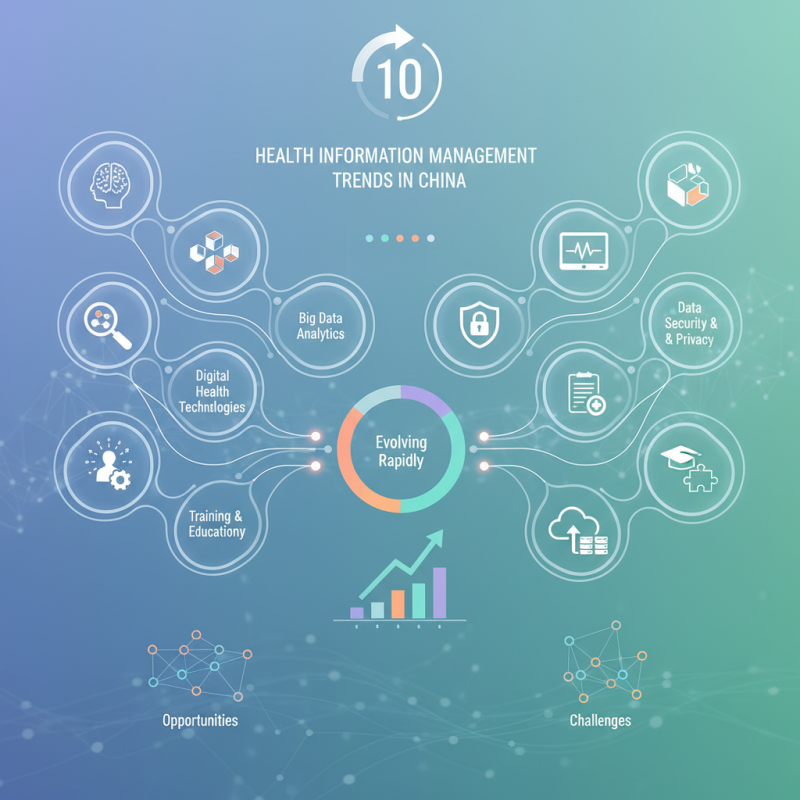
Top 10 Health Information Management Trends in China Today?

Emergence of Electronic Health Records (EHR) in China

The emergence of Electronic Health Records (EHR) in China is reshaping healthcare access and quality. In urban areas, hospitals are rapidly adopting EHR systems. These systems streamline patient data management. They allow for faster diagnosis and treatment options. However, the integration of EHR is not without challenges.

Rural regions still struggle with limited technological resources. Many healthcare providers lack training in EHR usage. This creates disparities in data accessibility. Not all patients feel comfortable with technology. Some worry about privacy and data security.

Yet, the potential benefits are immense. EHR can improve continuity of care and reduce medical errors. When implemented effectively, it enhances communication among healthcare providers. As China continues this digital transformation, the focus must remain on inclusivity and education for all health professionals.

Top 10 Health Information Management Trends in China Today

This chart illustrates the impact of the top 10 health information management trends in China, highlighting the significance of Electronic Health Records (EHR) adoption and other emerging trends shaping the healthcare landscape.

Integration of Artificial Intelligence in Health Information Management

The integration of artificial intelligence (AI) in health information management is a game changer for China's healthcare sector. According to a report by Frost & Sullivan, the AI in healthcare market in China is anticipated to exceed $9 billion by 2025. This growth highlights the significant role AI plays in streamlining operations and improving patient outcomes. AI technologies can analyze vast amounts of data quickly, enhancing decision-making processes for healthcare professionals.

AI assists in tasks like predictive analytics for patient diagnoses and treatment plans. For instance, natural language processing can help in transcribing patient interactions, improving data accuracy. Despite these advancements, challenges remain. Data privacy concerns and the need for high-quality datasets require careful management. AI systems depend on good data for accurate predictions, and poor data can lead to serious consequences. Misinterpretation of AI suggestions can cause healthcare disparities if not addressed critically.

There are signs that AI is reshaping workflows in hospitals and clinics. The World Health Organization emphasizes the need for comprehensive data governance frameworks to guide AI use. Balancing innovation with ethical considerations is essential. The promise of AI is considerable, yet organizations must tread cautiously to ensure that these technologies enhance rather than hinder health information management.

Top 10 Health Information Management Trends in China Today

Trends Description Impact Year
AI Integration Utilizing artificial intelligence to analyze patient data for better decision making. Improved accuracy of diagnoses and treatment plans. 2023
Telemedicine Remote consultations have increased due to pandemic needs. Enhanced access to healthcare for rural populations. 2023
Big Data Analytics Analyzing large volumes of health data for trends and insights. Informed policy making and resource allocation. 2023
Blockchain Technology Enhancing data security and patient privacy. Reduced risk of data breaches. 2023
Cloud Computing Storing and managing data over cloud platforms. Scalable solutions for healthcare providers. 2023
Patient Engagement Tools Apps and portals for patients to manage their health. Increased patient satisfaction and outcomes. 2023
Health Information Exchange (HIE) Connecting different healthcare systems for seamless data exchange. Better coordinated care. 2023
Regulatory Compliance Adhering to new health regulations regarding data management. Mitigating legal and financial risks. 2023
Personalized Medicine Tailoring treatment plans based on individual patient data. Higher success rates in treatments. 2023
Mobile Health (mHealth) Using mobile devices for health monitoring and information delivery. Increased accessibility and patient empowerment. 2023

Growth of Telemedicine and Remote Patient Monitoring

The growth of telemedicine and remote patient monitoring in China is transforming healthcare access. In 2022, a report from Frost & Sullivan highlighted that the telemedicine market is projected to reach ¥336 billion by 2025. This reflects a compound annual growth rate of over 20%. More patients are turning to virtual consultations, especially during the COVID-19 pandemic. Accessibility is a major advantage, yet gaps remain in technology adaptation.


Remote patient monitoring enables continuous health tracking outside of traditional settings. According to Statista, nearly 40% of Chinese adults are open to using wearable health devices. This trend indicates a shift towards proactive health management. However, the integration of such technologies poses challenges, such as data security and patient privacy. Concerns about reliability still linger in the minds of both patients and providers.


Adoption of these technologies varies significantly across regions. Urban areas see more advanced telehealth services, while rural populations often lack essential infrastructure. The potential for improved health outcomes is immense, but it needs comprehensive strategies to bridge these gaps. Education and investment in digital literacy will be crucial for maximizing the benefits of these innovations.

Regulatory Changes Impacting Health Information Practices

Regulatory changes have significantly shaped health information management in China. Recently, the government introduced new guidelines to improve data privacy and security. These updates require healthcare institutions to implement stricter protocols. For example, patient consent must now be explicitly obtained for data sharing. Compliance with these regulations is crucial for hospitals and clinics.

Additionally, electronic health records (EHRs) are now subject to more rigorous oversight. There is a push for standardized formats to ensure interoperability between systems. This shift aims to enhance efficiency in patient care. However, many institutions struggle to adapt to these standards. Lack of resources and training can hinder compliance efforts.

The evolving landscape presents both challenges and opportunities. Institutions can use these changes to improve their data management practices. By investing in staff training and technology, they can enhance patient trust. The impact of these regulations will continue to unfold, prompting reflection and adaptation in health information management.

Focus on Data Security and Patient Privacy in Health Management

In China, data security and patient privacy are becoming critical in health information management. As more health data is digitalized, risks emerge. Security breaches can lead to severe consequences, including identity theft and compromised patient trust. Healthcare institutions must prioritize protecting sensitive information.

Investing in advanced technologies is essential. Encryption and secure access controls can safeguard data. However, technology alone is not enough. Staff training on data protection practices remains crucial. Employees should understand the importance of privacy and the responsibilities they hold. Many organizations overlook this aspect, which leads to vulnerabilities.

Compliance with regulations is also paramount. Remaining updated on laws concerning data security is not just advisable; it is necessary. Healthcare organizations often find it challenging to navigate these evolving requirements. Continuous education programs can help bridge this gap. Awareness of these regulations fosters a culture of accountability. Thus, ensuring both compliance and enhanced patient trust becomes achievable.