Skip to content

Top 10 Finger Oximeter Manufacturers for Global Buyers

Choosing a reliable finger oximeter is not as simple as comparing prices or display colors. Global buyers must examine accuracy, sensor stability, product documentation, and long-term supplier support. A device may look identical in a product photo, yet perform differently on cold fingers, weak circulation, or moving hands.

Pulse oximetry has a practical history. Takuo Aoyagi, the Japanese biomedical engineer credited with its development, once said, “I was only trying to measure cardiac output.” His work reminds buyers that useful medical technology begins with a real measurement problem. Today, a dependable finger oximeter should provide stable SpO2 and pulse-rate readings, clear instructions, and consistent performance across ordinary home and professional settings.

This guide reviews ten finger oximeter manufacturers for global buyers. It considers manufacturing experience, quality controls, testing practices, certifications, warranty policies, and export capability. It also looks beyond attractive specifications. Do suppliers explain accuracy limits? Can they support private-label projects? Are replacement units available when a shipment fails?

Small details matter. Battery contacts should feel secure. The screen should remain readable in dim rooms. The clip should hold a finger without excessive pressure. These points often reveal real design quality.

No ranking is perfect. Buyer priorities differ. A hospital distributor may value documentation, while an online retailer may focus on packaging and delivery speed. Some manufacturers also disclose less information than buyers expect. That gap deserves attention, not blind trust. The shortlist below offers a practical starting point, but independent verification remains essential before purchase.
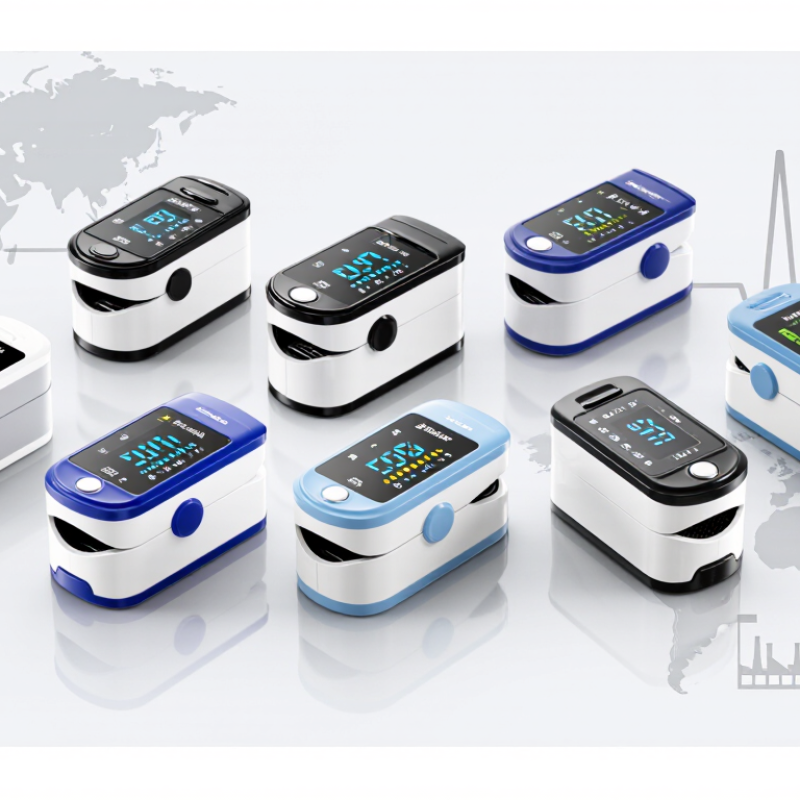
Top 10 Finger Oximeter Manufacturers for Global Buyers

Pulse Oximeter Market Scope and Buyer Demand: 2024 Industry Data

The global pulse oximeter market entered 2024 with steady demand from hospitals, clinics, pharmacies, and home-care users. Market estimates vary because some reports include only fingertip devices, while others count handheld and wearable systems. This reporting gap matters.

Buyer demand is shifting toward reliable readings, fast delivery, and simple operation. Healthcare distributors often request products with bright displays, replaceable batteries, low power use, and clear performance records.

Home users prefer lightweight devices that work with one button. They also expect comfortable finger clips and readable results in dim rooms.

Quality evidence remains essential. Buyers should examine calibration procedures, testing records, warranty terms, and supplier response times before selecting manufacturers. A low purchase price may hide higher costs from returns, inconsistent readings, or weak after-sales support. Not every factory presents data in the same format. That makes direct comparison difficult.

Regional demand also differs. Hospitals usually value durability and documentation, while retail buyers focus on price, packaging, and ease of use.

In emerging markets, stable supply and local technical support can influence purchasing decisions more than advanced features. Procurement teams should request sample units and test them across different finger sizes and skin temperatures.

One small weakness can become a large complaint. Forecasts often suggest continued growth, but demand may soften if inventories rise or clinical procurement budgets tighten.

How Finger Oximeters Measure SpO₂ and Pulse Rate Under ISO 80601-2-61

Finger oximeters estimate blood oxygen saturation through optical measurement, not direct blood analysis. Two light wavelengths, commonly red near 660 nanometers and infrared near 940 nanometers, pass through the fingertip. Oxygenated and deoxygenated hemoglobin absorb these wavelengths differently. The sensor compares their changing absorption during each heartbeat. This ratio produces an SpO₂ estimate, while waveform timing produces pulse rate.

ISO 80601-2-61:2017 defines essential safety and performance requirements for pulse oximeter equipment. Buyers should examine testing conditions, accuracy claims, motion performance, and low-perfusion results. The U.S. Food and Drug Administration has warned that skin pigmentation, cold fingers, nail products, movement, and poor circulation can affect readings. A 2020 New England Journal of Medicine study found occult hypoxemia in 11.7% of Black patients, compared with 3.6% of white patients, despite apparently acceptable readings. That difference deserves attention.

In practical use, a warm, still finger gives the device a cleaner signal. Wait for a stable waveform. Do not trust one number blindly. Pulse rate may appear normal while SpO₂ remains unreliable. Manufacturers serving global buyers should provide validation data across skin tones, ages, perfusion levels, and motion conditions. I would also question vague claims such as “medical accuracy.” They need a defined reference method, sample size, confidence range, and tested saturation interval. Even compliant devices have limits. Calibration drift, battery weakness, or a loose clip can quietly distort results.

Top 10 Finger Oximeter Manufacturers for Global Buyers - How Finger Oximeters Measure SpO₂ and Pulse Rate Under ISO 80601-2-61
Rank Anonymous Manufacturer Profile Typical Product Segment Measurement Principle Light Sources Typical SpO₂ Range Typical Pulse-Rate Range Common Accuracy Statement ISO 80601-2-61 Buyer Checkpoint Global-Buyer Verification Item Technical and Compliance Notes
1 Profile A Hospital and professional handheld units Non-invasive pulse oximetry using the pulsatile arterial component of transmitted light Red light near 660 nm and infrared light near 940 nm 70–100% in the commonly declared accuracy region 30–250 bpm Often declared as ±2 percentage points for 70–100% SpO₂; confirm the tested range Request the standard test report, accuracy methodology, and applicable operating conditions Confirm local registration, labeling language, authorized representative, and after-sales support Professional models may provide waveform or signal-quality indicators, but these features are not automatically required by the standard
2 Profile B Hospital bedside and continuous-monitoring systems Ratio-of-ratios calculation derived from red and infrared absorption changes during arterial pulsation Red and infrared LEDs with a photodetector on the opposite side of the finger Typically 70–100%; performance below 70% must be separately documented 25–250 bpm Accuracy may be specified as ±2% or ±3%, depending on the system and tested saturation range Check probe compatibility, alarm behavior, low-perfusion performance, and electromagnetic compatibility evidence Verify compatibility with the buyer’s monitor platform and replacement-probe availability Continuous systems require additional review of alarm limits, averaging time, motion tolerance, and data connectivity
3 Profile C General-purpose fingertip devices Transmissive optical measurement with pulse extraction from the periodic photoplethysmographic signal Dual-wavelength red and near-infrared LED pair 70–100% commonly reported for accuracy claims 30–250 bpm Many products publish ±2% in the 70–100% range; independent validation should be requested Confirm the declared intended use, patient population, accuracy range, and limitations for motion or poor perfusion Check battery type, operating temperature, device markings, instruction manual, and import documentation Readings can be affected by motion, cold extremities, poor circulation, nail products, skin pigmentation, and ambient light
4 Profile D Home-care and telehealth fingertip units Optical estimation of functional oxygen saturation and pulse rate from changing light absorption Approximately 660 nm red and 940 nm infrared wavelengths 70–100% for the primary accuracy claim 30–240 bpm Usually ±2 percentage points under stated laboratory conditions; real-world performance varies Ask whether validation included the intended user population, device placement, motion, and low-perfusion conditions Confirm app or Bluetooth claims, cybersecurity documentation, data ownership, and regional radio approvals Consumer connectivity features do not replace clinical validation or regulatory authorization
5 Profile E Low-power portable and travel devices Short-duration transmissive measurement using red/infrared absorption ratios Red and infrared LEDs; exact peak wavelengths should be listed in technical documentation 70–100% typical declared range 40–250 bpm Commonly stated as ±2% for SpO₂ and approximately ±1 bpm or ±1% for pulse rate, subject to conditions Review battery operation, startup time, auto shutoff, display stability, and performance at low signal strength Confirm transport packaging, spare batteries, charging requirements, and multilingual instructions Battery endurance and display readability are practical procurement factors but are not substitutes for accuracy evidence
6 Profile F Pediatric and small-finger models Same basic pulse-oximetry principle, using a smaller optical path and finger geometry Red and near-infrared light sources 70–100% when validated for the specified sensor size 30–250 bpm Do not assume adult accuracy claims apply to pediatric use; request population-specific evidence Verify declared patient size, sensor fit, mechanical safety, and validation for the intended age group Check pediatric labeling, regional medical-device classification, and distributor training requirements A loose or oversized clip can produce unstable readings; intended finger circumference should be clearly specified
7 Profile G Rugged emergency and field-use devices Pulse-synchronous optical measurement with enhanced signal processing for motion and low perfusion Red and infrared LEDs with shielding from external light 70–100% typical accuracy-test region 25–250 bpm Often ±2% under controlled conditions; motion performance requires separate test data Review ingress protection, drop testing, EMC results, alarm functions, and cable or probe durability Confirm service intervals, calibration policy, field-replaceable parts, and environmental operating limits Rugged construction may improve durability but does not guarantee reliable readings during movement or shock
8 Profile H OEM and private-label platforms Embedded pulse-oximetry module using calibrated red/infrared photoplethysmographic signals Dual-wavelength LED module; optical and algorithm specifications should be contractually documented Usually 70–100% for published claims 30–250 bpm Accuracy depends on the complete finished device, firmware, enclosure, sensor, and calibration process Require design-transfer records, risk management, software documentation, verification results, and change-control procedures Clarify legal manufacturer responsibilities, technical-file ownership, labeling rights, and post-market obligations Changing the enclosure, sensor geometry, firmware, or display may require renewed verification and regulatory assessment
9 Profile I Multi-parameter monitoring and data-export devices Pulse rate is derived from the periodic pulsatile waveform while SpO₂ is calculated from wavelength-specific absorption ratios Red and infrared optical channels, sometimes combined with additional sensing channels 70–100% commonly used for accuracy declarations 30–250 bpm SpO₂ and pulse-rate accuracy must be evaluated separately and against the intended reference method Check data integrity, alarm priority, timestamp accuracy, network behavior, and interface validation Verify interoperability, export formats, software licensing, and privacy requirements in the target market Pulse rate calculated from the optical waveform may differ from an ECG-derived heart rate during arrhythmia or signal disturbance
10 Profile J Value-focused retail and institutional supply units Basic transmissive pulse oximetry using red/infrared light absorption changes Red and infrared LEDs; wavelength tolerances should be confirmed from the technical file 70–100% typically stated for the main accuracy claim 30–250 bpm Published claims may state ±2%; buyers should distinguish manufacturer claims from independent validation Request evidence for essential performance, labeling, usability, EMC, and electrical safety applicable to the market Check minimum order quantity, batch traceability, warranty terms, complaint handling, and replacement policy Low purchase price should be evaluated alongside documentation quality, consistency between batches, and regulatory status
Technical note: ISO 80601-2-61 specifies particular requirements for basic safety and essential performance of pulse oximeter equipment and pulse oximeter monitors. The values above are typical specification ranges or buyer checkpoints, not claims about any named company or brand. Final purchasing decisions should be based on current regulatory documents, complete test reports, and validation data for the exact finished device.

Manufacturer Evaluation Criteria: Accuracy, Certifications, and FDA 510(k)

Top 10 Finger Oximeter Manufacturers for Global Buyers

Manufacturer Evaluation Criteria: Accuracy, Certifications, and FDA 510(k)

Choosing among the top finger oximeter manufacturers requires more than comparing prices. Accuracy should remain the central test. Buyers should request SpO2 and pulse-rate results from controlled clinical studies, not only factory bench tests. Ask how each model performs during motion, cold fingers, low perfusion, and darker skin tones. Small screens can still provide dependable readings. However, unclear testing methods deserve caution.

Certifications help assess manufacturing discipline. ISO 13485 indicates a medical-device quality system, but it does not prove clinical accuracy. Market access may also require region-specific conformity assessment, technical files, and post-market monitoring. Check the certificate number, issuing body, expiry date, and exact manufacturing site. A certificate copied into a sales brochure proves little. This is easy to overlook.

For United States sales, verify the FDA 510(k) record in the official database. Match the clearance to the exact model, intended use, manufacturer, and product classification. Do not treat 510(k) clearance as universal approval or proof of performance in every situation. Request the summary, labeling, predicate comparison, and validation evidence. Review complaint handling and recall history when available. Samples should be tested independently before a large order. No evaluation is perfect, and even experienced buyers can trust polished documents too quickly. That mistake is expensive.

Top 10 Finger Oximeter Manufacturers by Technology, Scale, and Reach

Top 10 Finger Oximeter Manufacturers for Global Buyers

The top ten finger oximeter manufacturers differ in technology, production scale, and international reach. Leading suppliers now combine dual-wavelength sensors, motion-tolerant algorithms, OLED displays, and automated alerts. Some also offer Bluetooth data transfer for home monitoring and telehealth workflows. According to Grand View Research, the global pulse oximeter market was valued at approximately US$2.7 billion in 2023. The report expects continued growth through 2030, supported by home care and hospital demand. WHO guidance also recognizes pulse oximetry as an important tool for detecting low blood oxygen. However, device accuracy still depends on circulation, movement, temperature, and skin pigmentation.

Tips: Ask for ISO 13485 certification, independent accuracy testing, and clear calibration records. Check performance data across different skin tones. Request samples before placing a large order. A polished screen means little without reliable readings.

For global buyers, manufacturing scale matters as much as sensor design. High-capacity factories can support stable supply, private-label production, and regional inventory. Smaller specialists may provide better customization and faster engineering feedback. Distribution reach should include documented after-sales service, multilingual manuals, spare sensors, and responsive technical support. Regulatory registration also varies by destination, so one certificate cannot guarantee worldwide acceptance. The FDA has warned that several factors may affect pulse oximeter readings, including poor blood flow and skin pigmentation. No ranking is perfect. A manufacturer with impressive export figures may still lack transparent validation data, and that deserves careful review.

Global Buyer Due Diligence: IEC 60601-1, CE, Warranty, and Supply Capacity

Global Buyer Due Diligence: IEC 60601-1, CE, Warranty, and Supply Capacity

Selecting a finger oximeter manufacturer requires more than comparing unit prices. Buyers should request current IEC 60601-1 test evidence and confirm its exact product scope. A certificate with unclear model numbers creates unnecessary risk. CE documentation should include the applicable conformity route, technical file references, and responsible economic operator details. Do not accept a logo image alone. Verify the documents with the issuing laboratory or notified organization when possible.

Product samples deserve practical testing. Check oxygen saturation readings against a calibrated reference device, especially under movement and low-perfusion conditions. Inspect screen brightness, probe pressure, battery access, and automatic shutdown. Small weaknesses become expensive after thousands of shipments. Ask about software changes and production-line inspection records. The evidence may be incomplete. That is worth discussing openly.

Warranty terms should define coverage, exclusions, replacement timing, and shipping responsibility. Request failure-rate data from recent production batches, not only marketing estimates. Supply capacity also needs measurable proof: monthly output, lead time, minimum order quantity, component sources, and backup production arrangements. Ask whether the factory can maintain consistent readings during demand peaks. A factory tour or live video audit can reveal storage congestion, manual testing gaps, or poor lot traceability. No checklist is perfect, but documented answers make commercial judgment more reliable.

Top 10 Finger Oximeter Manufacturers for Global Buyers

Global Buyer Due Diligence: IEC 60601-1, CE, Warranty, and Supply Capacity

This reference timeline highlights the publication years of key standards and regulatory frameworks commonly reviewed during finger oximeter supplier due diligence. Buyers should verify the applicable test reports, declarations, product classification, warranty terms, and supply records for each supplier because regulatory requirements vary by destination market and product configuration.