Choosing reliable remote monitoring devices requires more than comparing prices or browsing attractive product pages. In hospitals, factories, warehouses, and smart homes, a small sensor may track temperature, heart rate, movement, pressure, or equipment status. Its readings can influence maintenance decisions, patient care, and daily operations. Accuracy matters. So does stability.
This guide introduces China’s top 10 remote monitoring devices suppliers through practical evaluation criteria. We consider product design, measurement performance, certifications, software compatibility, data security, production capacity, and after-sales support. Supplier experience also matters, especially when devices must operate continuously in changing environments. A factory monitoring sensor may face dust and vibration, while a wearable device must remain comfortable during long use.
The ranking should not be treated as permanent. Market positions change. Public information can also be incomplete. Buyers should request test reports, sample units, warranty terms, and clear calibration records before making a decision. A video demonstration is useful, but it cannot replace real-world testing. This is where many comparisons become less certain.
We also examine communication options, including Wi-Fi, Bluetooth, cellular networks, and wired connections. Each option has different costs and coverage limits. Strong suppliers explain these trade-offs instead of promising universal performance. The goal is not to name a single perfect manufacturer. It is to help readers identify dependable partners and ask better technical questions. Some conclusions may need further verification, and that is an honest part of responsible sourcing.
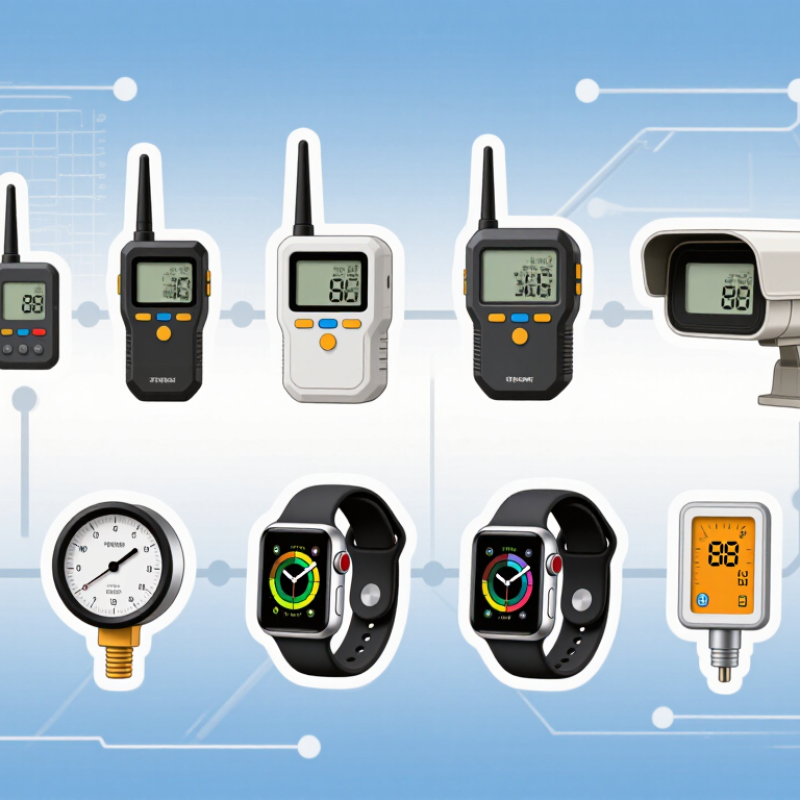
Remote monitoring devices extend clinical observation beyond hospitals and clinics. Their scope includes home care, chronic disease management, post-discharge follow-up, elder care, and supported living. Common types include wearable ECG patches, blood pressure cuffs, pulse oximeters, glucose sensors, thermometers, and multi-parameter gateways. Each device serves a different measurement need. A pulse oximeter may show oxygen changes during sleep, while an ECG patch records rhythm patterns during daily activity.
In practical use, reliable monitoring depends on more than sensor accuracy. Professionals should assess calibration, battery life, connectivity, comfort, and data integration. A patient may remove an uncomfortable patch. A weak home signal can delay transmission. False alarms also create unnecessary clinical workload. No device captures the complete patient picture. That limitation deserves regular review, not optimistic assumptions. Applications range from early warning and medication review to rehabilitation tracking and routine consultations. Clear escalation rules help clinicians distinguish urgent changes from normal variation.
Tips: Match each device to the user’s condition and daily routine. Check validation evidence, measurement ranges, and maintenance needs before deployment. Explain placement with simple demonstrations, such as keeping a blood pressure cuff at heart level. Protect access credentials and limit unnecessary data collection. Test the full workflow, including alerts, offline periods, and clinician response. Small operational gaps often matter more than impressive specifications.
Evaluating China’s remote monitoring device suppliers requires more than comparing product prices. Buyers should examine measurement accuracy, device stability, data protection, and production consistency. Independent test reports are valuable, but they should match the actual shipment model. A certificate alone proves little.
Experienced procurement teams request sample units and test them under realistic conditions. They check signal strength, battery performance, alert speed, and data continuity. Supplier evaluation should also include quality-control records, component traceability, factory audits, and responsive technical support. Clear documentation shows professional competence. Reliable suppliers explain limitations instead of promising perfect performance. That matters.
Tips: Request samples. Test real workflows. Verify certifications. Check software updates. Ask about failure handling. Review warranty terms. Confirm data ownership and storage locations. Do not ignore after-sales response time. A low quotation may hide integration costs or repeated replacements.
Evaluation can still be imperfect. Laboratory results may not reflect crowded networks, temperature changes, or daily user errors. Therefore, buyers should combine technical evidence with pilot feedback from actual operators. A transparent supplier welcomes difficult questions and records corrective actions. Look for measurable evidence, not polished claims. This approach supports safer purchasing decisions and more dependable long-term monitoring.
China’s remote monitoring device market covers healthcare, eldercare, industrial safety, and home-based care. This profile guide examines ten leading Chinese suppliers through practical capabilities, not promotional claims. Some focus on wearable vital-sign monitors, while others produce gateways, environmental sensors, or cloud-connected alarm units. Their strongest common feature is flexible manufacturing for different project sizes.
A reliable supplier should provide clear testing records, stable firmware, and traceable calibration procedures. Several profiled companies support heart-rate, temperature, oxygen-level, motion, or equipment-status monitoring. Others offer waterproof housings, long battery life, and cellular or Wi-Fi communication. Buyers should inspect sample data, response time, and alarm accuracy before placing large orders. A polished product page is not enough.
The best profiles also reveal weaknesses. Some suppliers have limited overseas service teams. Others depend heavily on customized software, which may extend delivery schedules. Ask about replacement parts, security updates, export documentation, and technical training. Factory visits can expose useful details, such as cable management, test benches, and packaging discipline. A small pilot project remains wise. It may uncover connection failures that a demonstration hides. Supplier rankings should therefore remain flexible, because performance depends on application, region, and support quality.
The chart summarizes the number of supplier profiles associated with each major remote monitoring capability. Because suppliers may offer multiple product categories, the figures are not mutually exclusive. Wireless connectivity, environmental sensing, and industrial telemetry are among the most widely represented capabilities.
China’s top remote monitoring device suppliers differ sharply in products, technologies, certifications, and services. Common products include wearable ECG patches, blood-pressure monitors, pulse oximeters, glucose systems, and connected gateways. Grand View Research estimated the global remote patient monitoring market at about USD 14 billion in 2023, with strong growth expected through 2030. This demand favors suppliers offering cellular, Bluetooth, and cloud-based connectivity. However, wireless range and battery life still vary in real clinical settings.
Certification is a practical comparison point. Medical-device manufacturers should demonstrate ISO 13485 quality management, relevant IEC 60601 safety testing, and cybersecurity controls such as ISO 27001. Software supporting monitoring may also require IEC 62304 processes. CE or FDA clearance can support international distribution, but certification scope matters. A cleared sensor does not automatically validate its mobile application or analytics engine. That detail is often missed.
The World Health Organization also stresses interoperability and data protection in digital health systems (WHO, Global Strategy on Digital Health 2020–2025).
Tips:
Request complete test reports, not certificate images alone. Ask for accuracy data across skin types, motion levels, and low-signal conditions. Check response times for replacement units and technical support. Trial the dashboard with real nurses before signing a contract. The mistake is trusting a polished demonstration. Service quality may be less visible, but it decides whether alerts become useful clinical action. Some supplier claims remain difficult to compare because testing methods are not standardized. That deserves scrutiny.
Selecting a Chinese supplier for remote monitoring devices requires more than comparing catalog prices. Define the application clearly: temperature, location, equipment status, or patient-free environmental monitoring. A cold-chain logger may need a calibrated probe, stable battery performance, and an IP-rated enclosure. Test the sample.
Request technical drawings, communication protocols, firmware update procedures, and recent quality records. Confirm whether measurements are traceable to recognized standards. For international sales, check applicable certifications, radio approvals, data protection controls, and electrical safety documentation. Certificates should match the exact model, not a similar product.
Visit the factory when practical, or arrange a live video audit. Observe incoming inspection, aging tests, calibration stations, and final packaging. Ask for serial-number traceability and a documented process for defective units. A reliable supplier should explain lead times, minimum order quantities, spare parts, and technical support without vague promises. Written service-level terms matter.
Do not judge reliability from polished photos alone. A low quotation may exclude cloud fees, custom tooling, or replacement sensors. I have seen sourcing plans overvalue hardware and underestimate integration work. That is an easy mistake. Run a small pilot in real conditions, including weak signals, temperature changes, and power interruptions. Review data accuracy, alert speed, dashboard usability, and recovery after connection loss. Keep one independent test method, because supplier reports deserve verification.
| Profile | Primary Device Category | Typical Monitoring Application | Common Connectivity Options | Typical Sensor Inputs | Typical Battery or Power Configuration | Common Protection Level | Customization Capability | Recommended Buyer Type | Key Selection Check |
|---|---|---|---|---|---|---|---|---|---|
| 1 | Industrial IoT gateway supplier | Factory equipment, production lines, energy systems and building automation | 4G LTE, Ethernet, Wi-Fi, RS-485 and industrial protocols such as Modbus RTU/TCP | Digital I/O, analog input, RS-485, temperature, pressure and vibration sensors | External DC power, commonly 9–36 VDC; optional backup battery | Usually IP30–IP65, depending on enclosure design | High; firmware, enclosure, interfaces and cloud API may be configured | Manufacturers, system integrators and facility operators | Confirm protocol compatibility, operating temperature and remote firmware-update support |
| 2 | GPS vehicle tracking device supplier | Fleet management, logistics, rental vehicles and mobile assets | 4G LTE, GNSS, Bluetooth and optional Wi-Fi positioning | Ignition status, vehicle voltage, door status, harsh acceleration and location | Vehicle power with internal backup battery; battery capacity varies by model | Commonly IP54–IP67 for vehicle-mounted units | Medium to high; wiring harnesses, reporting rules and platform integration are often configurable | Fleet owners, logistics companies and transportation integrators | Check regional cellular-band support, positioning accuracy and data-retention policy |
| 3 | Cold-chain temperature logger supplier | Food, pharmaceutical, laboratory and refrigerated transport monitoring | Bluetooth, 4G LTE, NB-IoT, Wi-Fi or USB data export | Temperature, humidity, door opening and shock | Replaceable or rechargeable lithium battery; long-life models may operate for several months | Often IP54–IP67, with insulated probes available | Medium; sensor range, alarm thresholds, labels and software reports may be customized | Cold-chain logistics providers, warehouses and quality-control teams | Verify calibration certificates, probe accuracy, alarm response and compliance requirements |
| 4 | Environmental monitoring station supplier | Outdoor air quality, weather, agriculture and smart-city projects | 4G LTE, LoRaWAN, NB-IoT, Ethernet or solar-powered wireless communication | Temperature, humidity, PM2.5, PM10, CO2, rainfall, wind and solar radiation | Solar panel with rechargeable battery; mains-powered versions are also available | Usually IP65 or higher for outdoor enclosures | High; sensor combinations, mast design, sampling intervals and data platforms can be tailored | Municipal projects, farms, environmental consultants and research users | Review sensor calibration method, outdoor durability, solar autonomy and data export formats |
| 5 | Medical and personal health monitoring device supplier | Home healthcare, elderly care, wellness and remote patient-support programs | Bluetooth Low Energy, Wi-Fi, cellular connectivity or USB | Heart rate, blood oxygen saturation, body temperature, blood pressure and activity | Rechargeable battery, commonly supported by USB charging | Generally designed for indoor use; protection level varies by device | Medium; enclosure, app interface, language support and data integration may be customized | Healthcare distributors, care organizations and telehealth integrators | Confirm regulatory status, measurement accuracy, privacy controls and clinical validation |
| 6 | Water and liquid-level monitoring supplier | Water tanks, pumping stations, irrigation, flood warning and wastewater systems | 4G LTE, NB-IoT, LoRaWAN, RS-485 and wired Ethernet | Liquid level, flow, pressure, leakage, water quality and pump status | Battery, mains power or solar power, depending on installation location | Typically IP65–IP68 for sensors installed in wet environments | High; probe length, communication protocol, alarm logic and mounting can be adapted | Utilities, agricultural operators, property managers and engineering contractors | Check media compatibility, measuring range, installation method and low-signal performance |
| 7 | Asset and equipment condition-monitoring supplier | Predictive maintenance for motors, pumps, compressors and rotating machinery | Bluetooth, Wi-Fi, 4G LTE, LoRaWAN or wired industrial networks | Vibration, temperature, acoustic emission, rotation speed and magnetic-field status | Replaceable battery, rechargeable battery or industrial DC power | Commonly IP65–IP67 for industrial installation | High; mounting, sampling frequency, analytics rules and dashboard integration may be customized | Factories, maintenance contractors and machine builders | Evaluate sampling rate, vibration-frequency range, sensor mounting and analytics accuracy |
| 8 | Security and remote video-monitoring supplier | Construction sites, warehouses, retail locations and remote facilities | Ethernet, Wi-Fi, 4G LTE, 5G or fiber-connected networks | Video, motion, sound, door status and optional environmental sensors | AC power, PoE, solar power or battery-supported configurations | Indoor models vary; outdoor models commonly use IP66-rated housings | Medium to high; camera resolution, storage, analytics and alarm interfaces can be specified | Security integrators, site operators and commercial property owners | Check low-light performance, storage ownership, cybersecurity controls and local privacy laws |
| 9 | Smart energy and power-quality monitoring supplier | Solar installations, commercial buildings, factories and electrical distribution systems | RS-485, Modbus TCP, Ethernet, Wi-Fi, 4G LTE and cloud APIs | Voltage, current, active power, energy consumption, frequency and power factor | Usually powered from the monitored electrical system or an auxiliary DC supply | Typically IP30–IP65, depending on panel or outdoor installation | High; meter range, CT configuration, communication protocol and reporting can be adapted | Energy-service companies, facility managers and renewable-energy operators | Verify measurement class, current-transformer compatibility, safety certifications and API access |
| 10 | Wearable and personnel-safety monitoring supplier | Worker safety, lone-worker protection, location tracking and emergency response | Bluetooth, GNSS, Wi-Fi, 4G LTE, NB-IoT or LoRaWAN | Location, fall detection, motion, heart rate, temperature and emergency-button status | Rechargeable battery; operating time depends on positioning and communication frequency | Many industrial models offer IP65–IP67 protection | Medium; enclosure, alert workflow, geofencing and enterprise software integration are configurable | Construction firms, mining operators, warehouses and industrial employers | Assess battery endurance, emergency-message delivery, geofence accuracy and worker-data privacy |
Note: The profiles above describe common China-market supplier capabilities and device specifications rather than named companies or brands. Actual performance, certifications, minimum order quantities, lead times and customization terms should be verified directly with each shortlisted supplier.